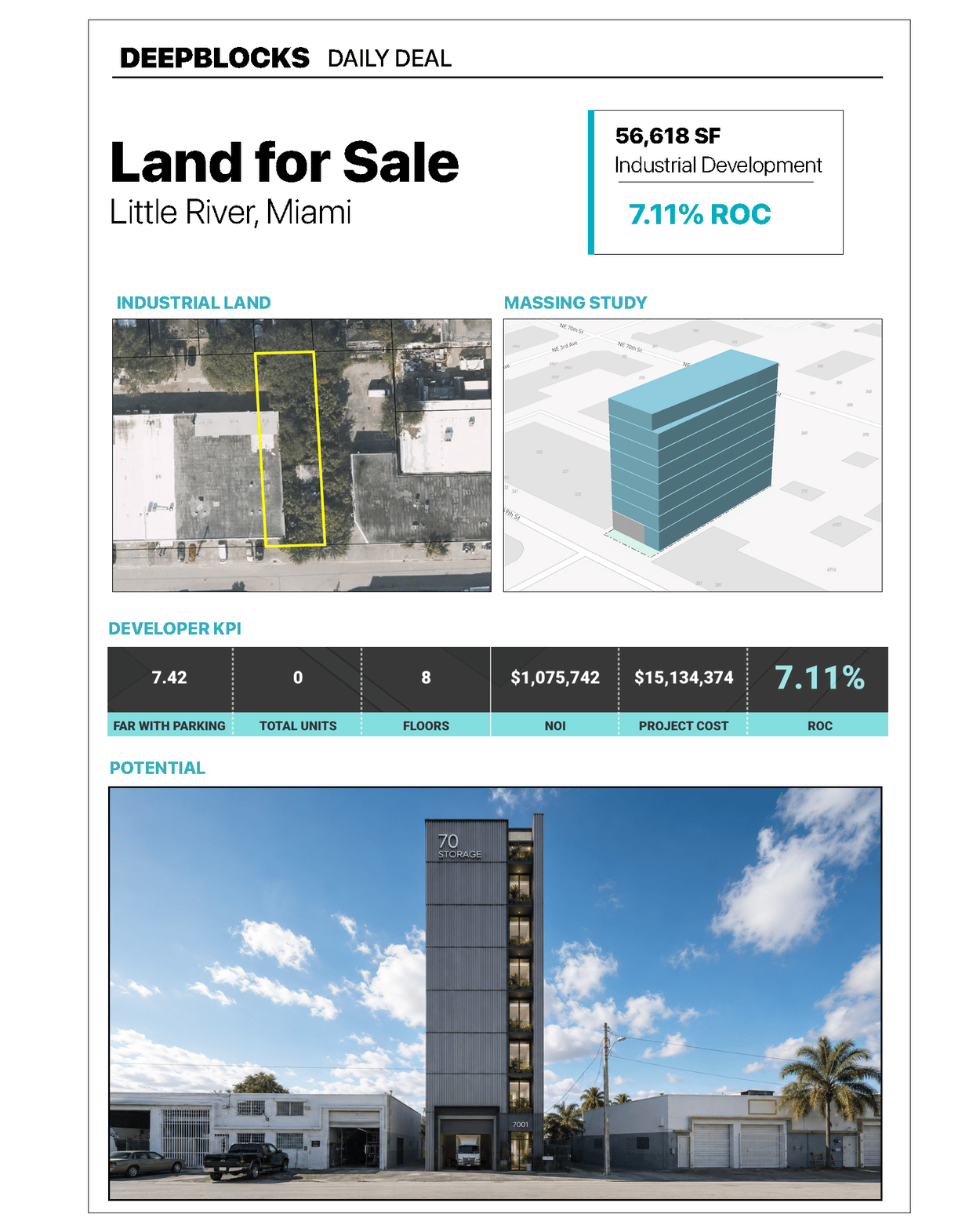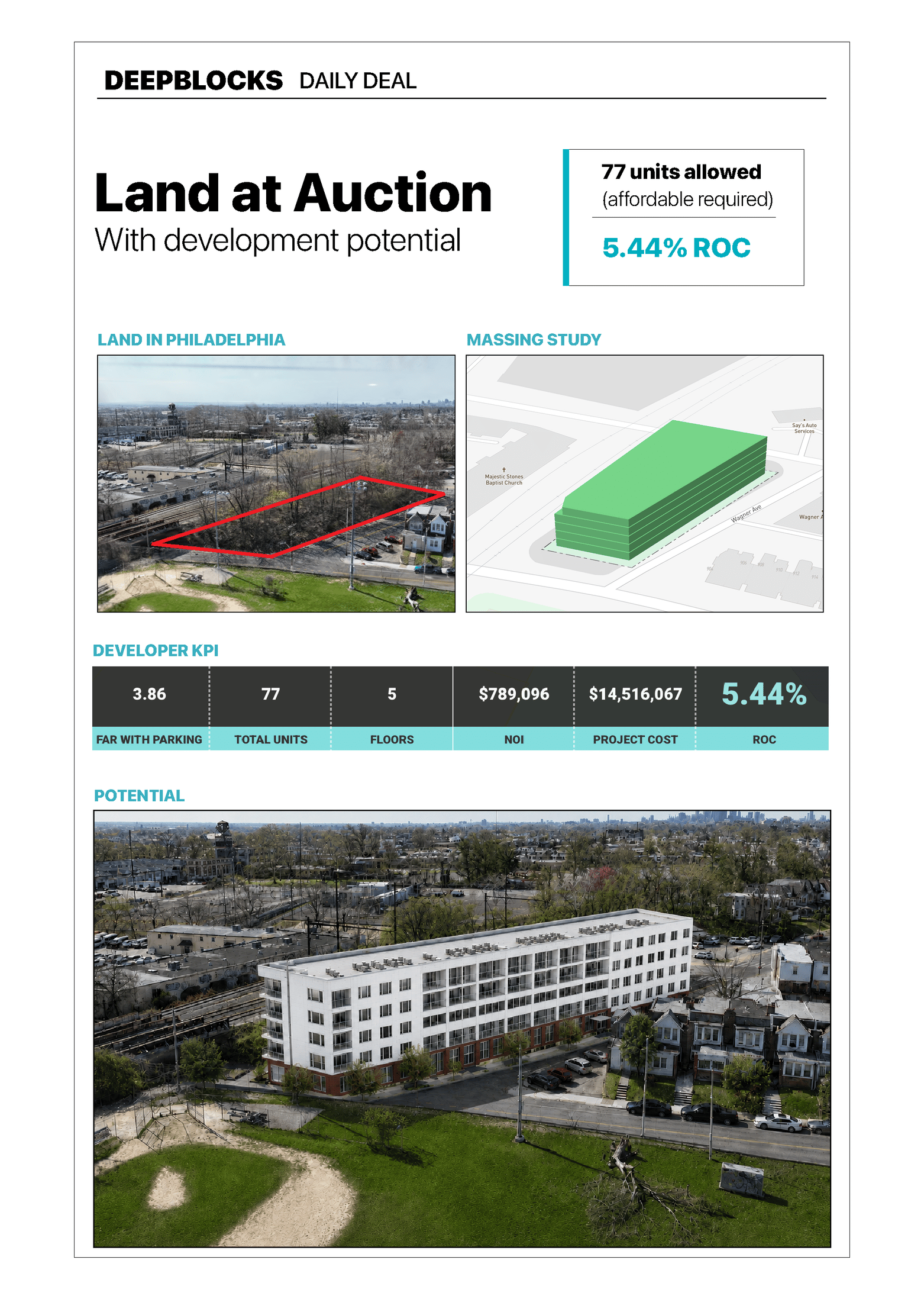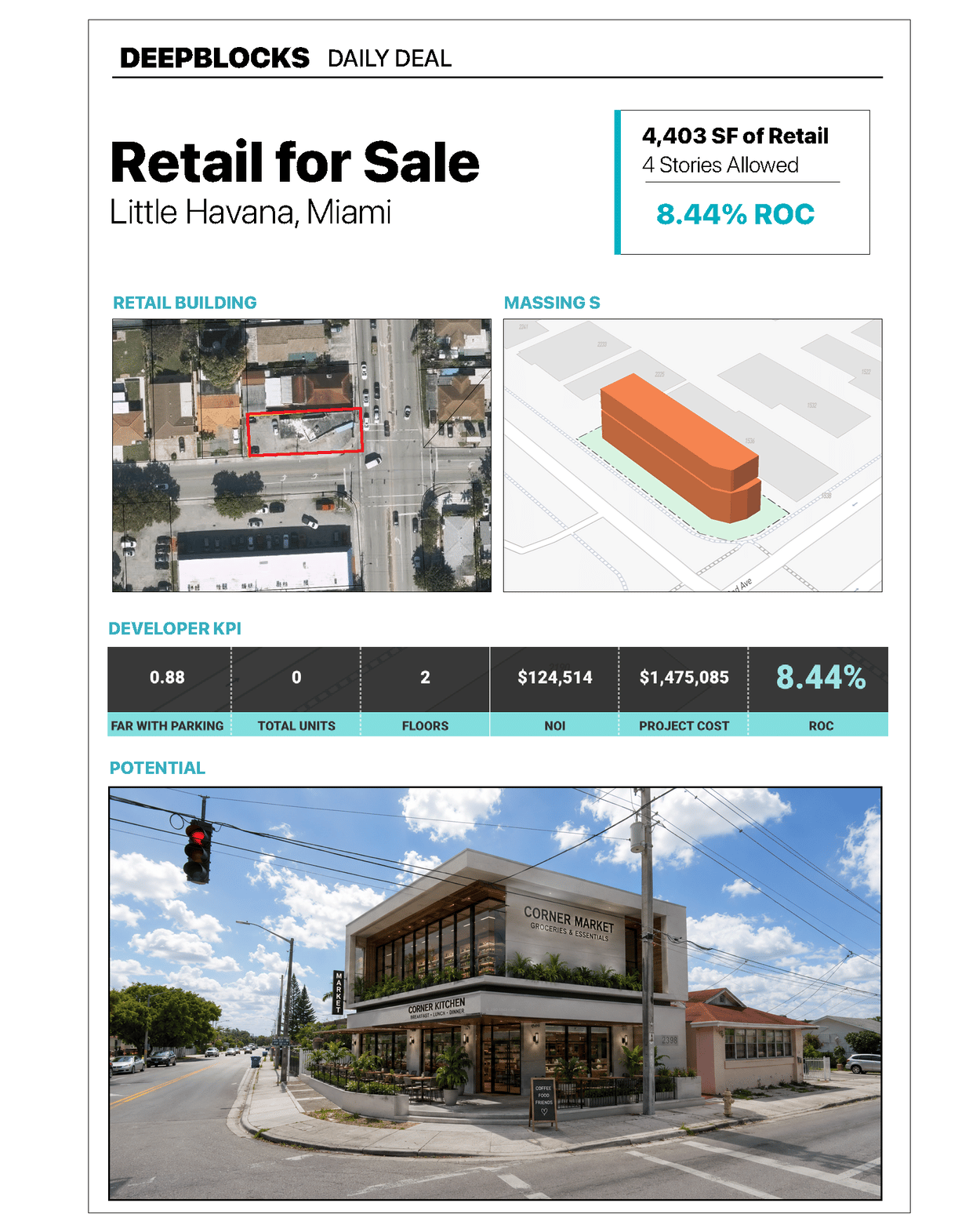
Every real estate deal evaluation has two jobs.
Only one of them should still be human.
The first job is gathering.
Pull the zoning. Find the comps. Review the rent rolls. Build the financials. Structure the assumptions. Turn the mess into something readable.
The second job is judgment.
Look at the study. Understand the risk. Compare the upside. Decide whether the deal is worth pursuing.
For most of my career, gathering ate the day.
The judgment, the part only I could do, and the part I actually enjoyed, got whatever time was left.
That imbalance is one of the biggest problems in real estate investment.
The most valuable people in the room often spend too much of their time collecting information, cleaning up data, checking documents, formatting assumptions, and building the materials needed to make a decision.
By the time the study is ready, the real work is only beginning.
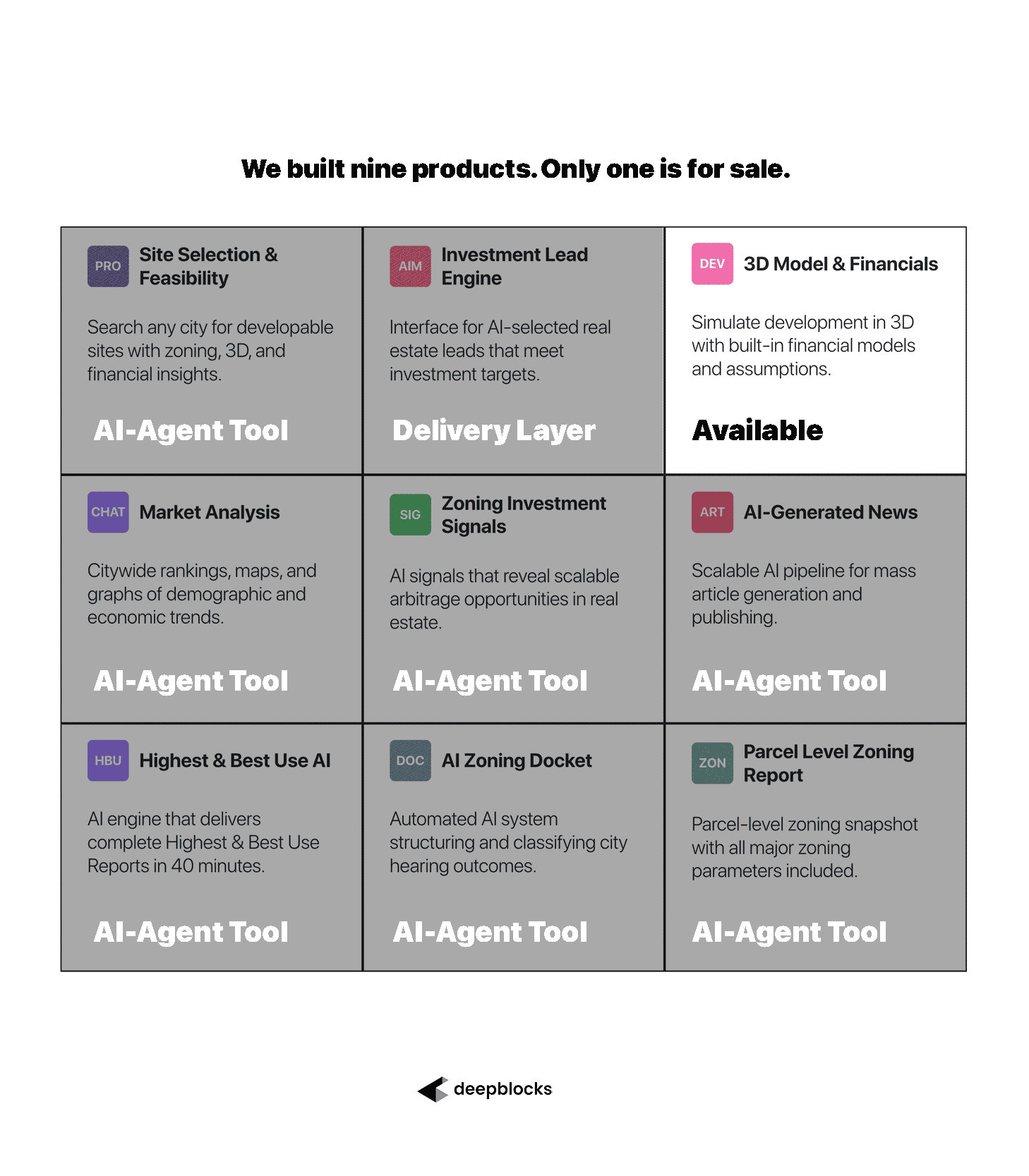
Explore how customized AI agents find deal-flow.
Faster Homework Was Not Enough
At Deepblocks, we spent years building software to make the gathering faster.
It helped.
A better zoning tool made it easier to understand what could be built. Better site analysis made it easier to test development potential. Better data infrastructure made it easier to compare locations, understand market signals, and organize leads.
But eventually we realized something important.
Customers did not want faster homework.
They wanted the homework gone.
That changed how we thought about the product.
The goal was no longer to give customers better tools for collecting information. The goal was to deliver the completed study so they could spend their time on the decision.
Because in real estate investment, the value was never in collecting the information.
The value is in knowing what to do with it.
Moving the Line
For years, software helped customers gather information more efficiently.
That was useful, but it still left the customer responsible for too much of the process.
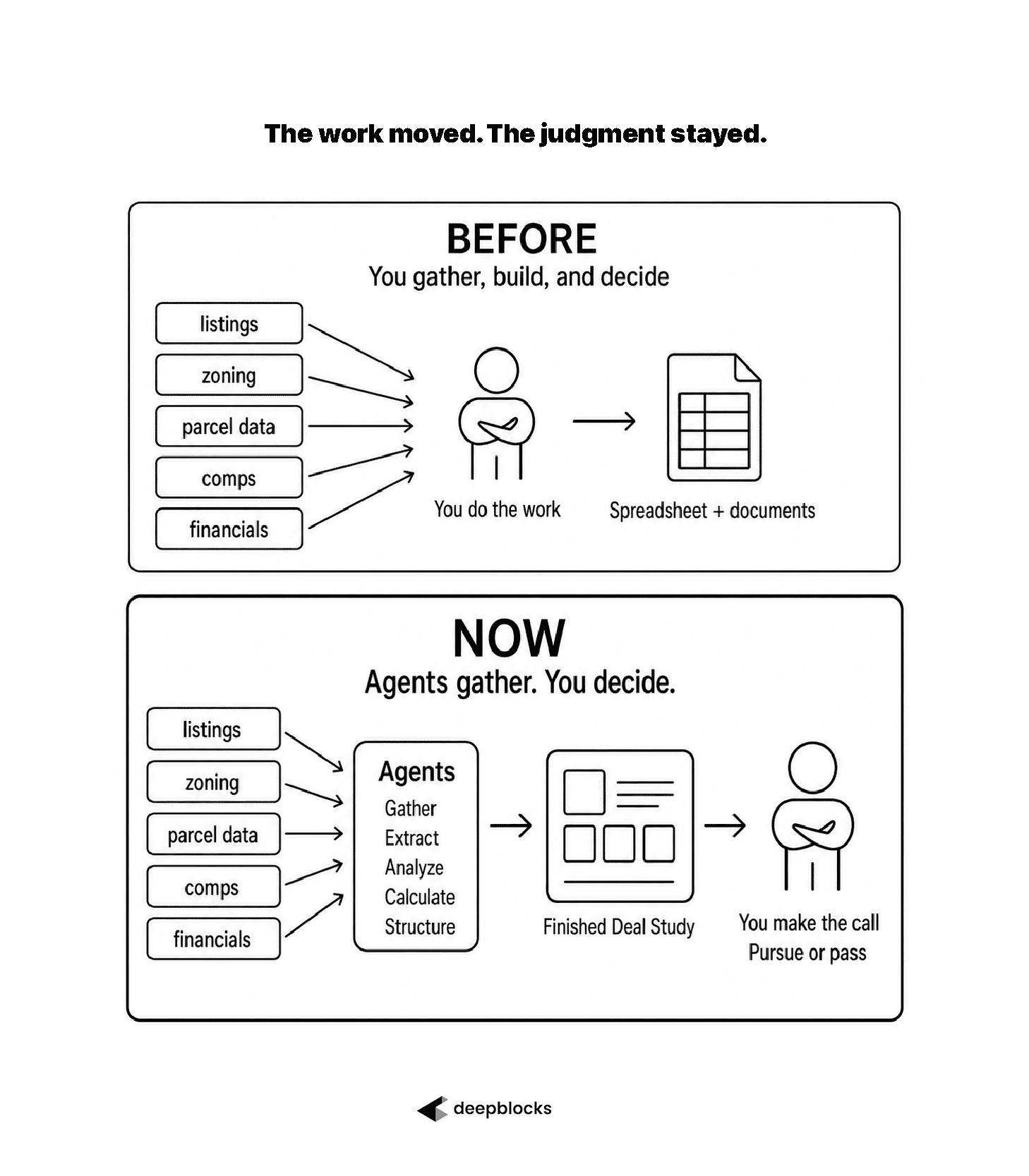
They still had to open the tool, run the search, interpret the output, move the information into a model, check the assumptions, organize the findings, and decide what mattered.
That is not a finished workflow.
That is a faster version of the same workflow.
AI agents allow us to move the line.
Today, agents can gather the data, extract the relevant details, calculate feasibility, structure assumptions, and hand over a finished study.
The customer does not need another dashboard to check.
They do not need another system to manage.
They do not need a faster way to do the same work.
They need the work completed.
What remains is the part that was always supposed to be human: the judgment.
What Deal Flow Is
That is what Deal Flow is.
Deal Flow is not more software to manage.
It is not another dashboard filled with data points.
It is not a faster search tool.
It is a system that delivers the study, so the customer can make the decision.
The purpose is simple: remove the gathering work that slows down deal evaluation and give customers the information they need in a form they can act on.
A real estate investor should not have to spend the day chasing down every input before they can think clearly about a deal.
They should be able to review the opportunity, understand the assumptions, compare the risk and upside, and decide whether the deal deserves attention.
That is where human judgment matters most.
The Human Role Gets Clearer
There is a common fear that AI will replace the human role in decision-making.
But in real estate investment, the better framing is that AI can separate the work from the judgment.
The work is repetitive, fragmented, and time-consuming.
The judgment is contextual, strategic, and human.
A finished study does not remove the need for expertise. It creates more room for expertise.
The investor still has to decide whether the assumptions are realistic. The developer still has to understand entitlement risk. The broker still has to know whether the market will respond. The team still has to decide whether the upside is worth the effort.
AI can prepare the study.
It cannot own the risk.
That is still human.
The Value Is in the Decision
Real estate investment has always depended on judgment.
Data matters. Analysis matters. Process matters.
But none of those things are the final product.
The final product is a decision.
Do we pursue this site?
Do we pass?
Do we revise the assumptions?
Do we make an offer?
Do we spend more time here, or move on?
The problem is that too much of the industry still spends most of its time getting ready to make those decisions.
That is the opportunity for agentic workflows.
Not to replace the investor.
To remove the drag around the investor.
Not to make judgment less important.
To make judgment the center of the workflow again.
The Shift Ahead
The next generation of real estate software will not be defined by how much information it contains.
It will be defined by how much work it completes.
A system that simply stores information is useful.
A system that helps users find information faster is better.
But a system that gathers the information, structures the analysis, and delivers a finished study changes the workflow entirely.
That is where we believe the industry is going.
From gathering to judgment.
From dashboards to decisions.
From faster homework to finished work.
For anyone evaluating deals right now, the question is simple:
How much of your day is spent gathering, and how much is spent deciding?