

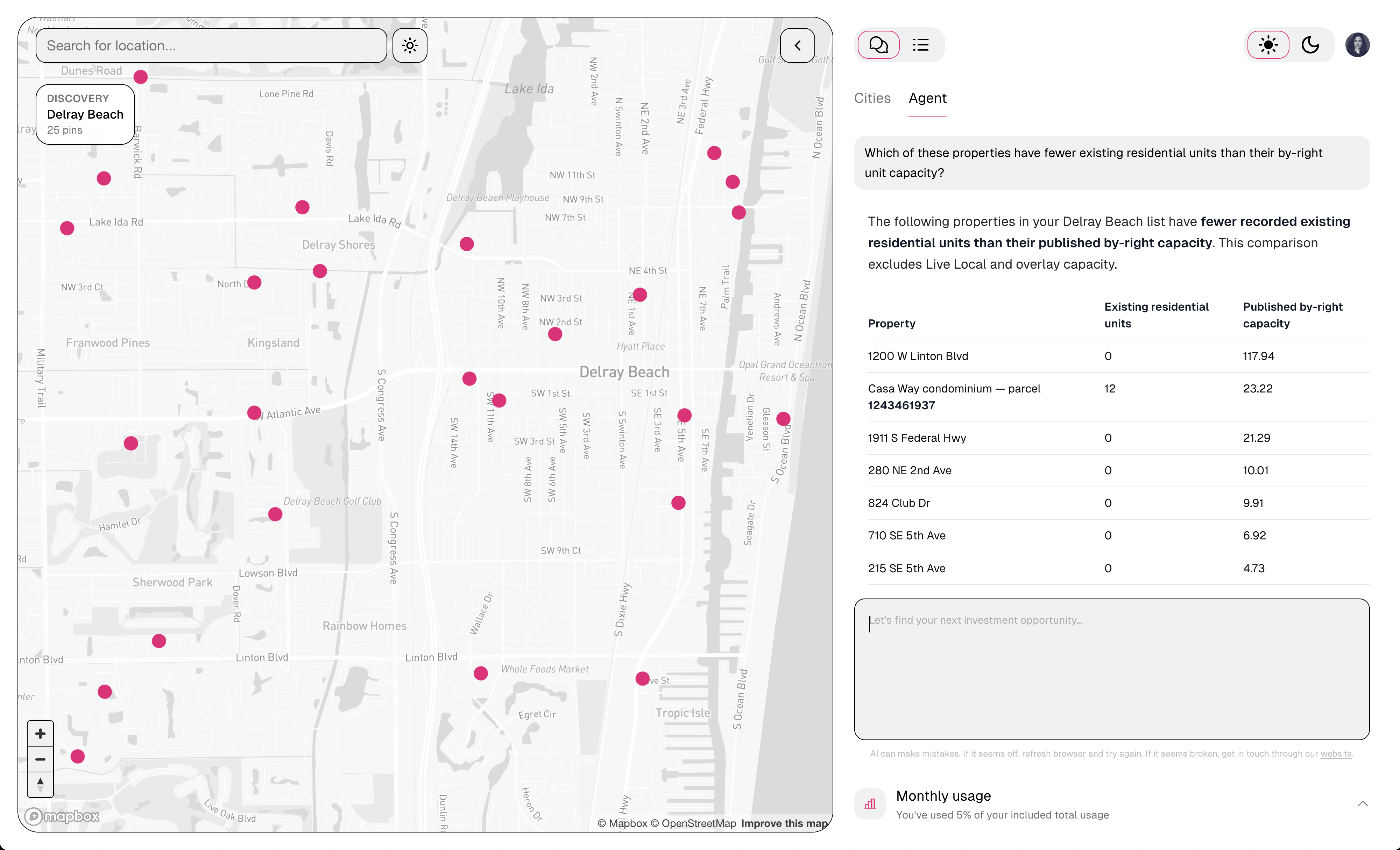
Assess your property portfolio’s development potential with AIM
AIM can map a property list so investors can review zoning capacity, compare existing residential units with capacity, and identify sites near transit.
AIM can map a property list so investors can review zoning capacity, compare existing residential units with capacity, and identify sites near transit.
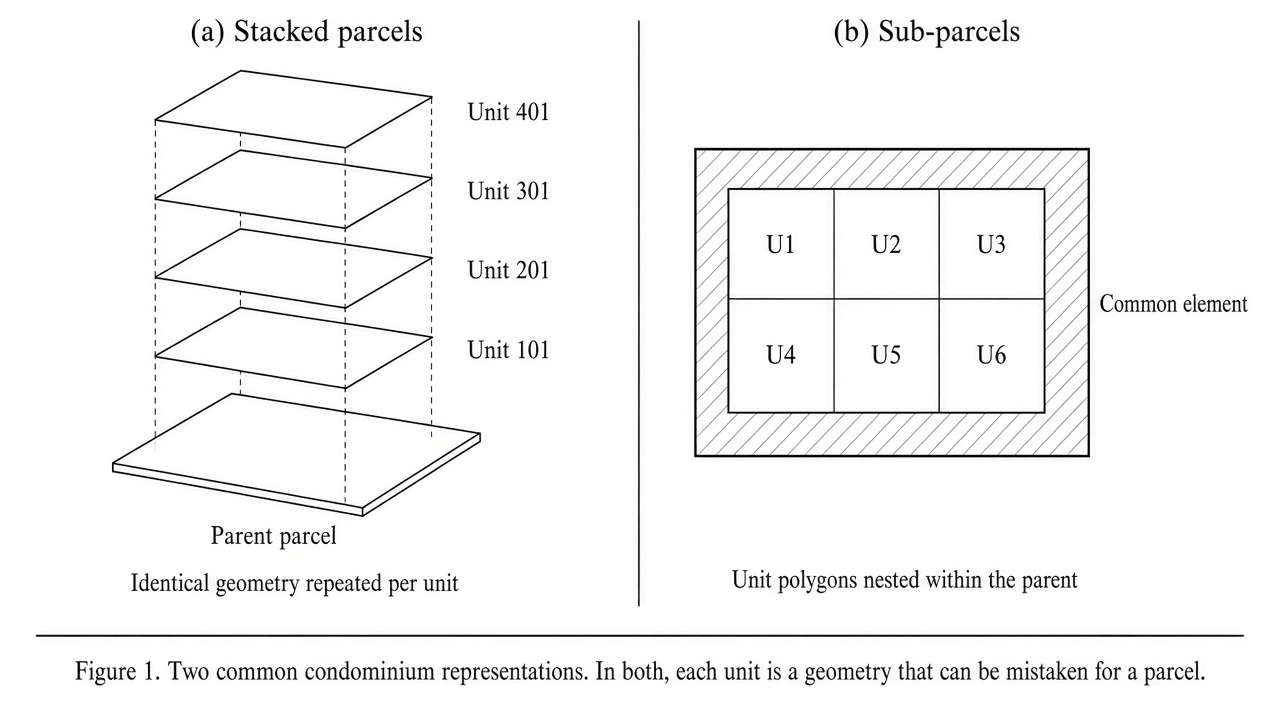
A condominium tower can arrive as hundreds of unit records and stacked geometries. Delray Beach and our next Ann Arbor release show why units need to be linked to their buildings and properties, and why missing data must not be read as vacant land.
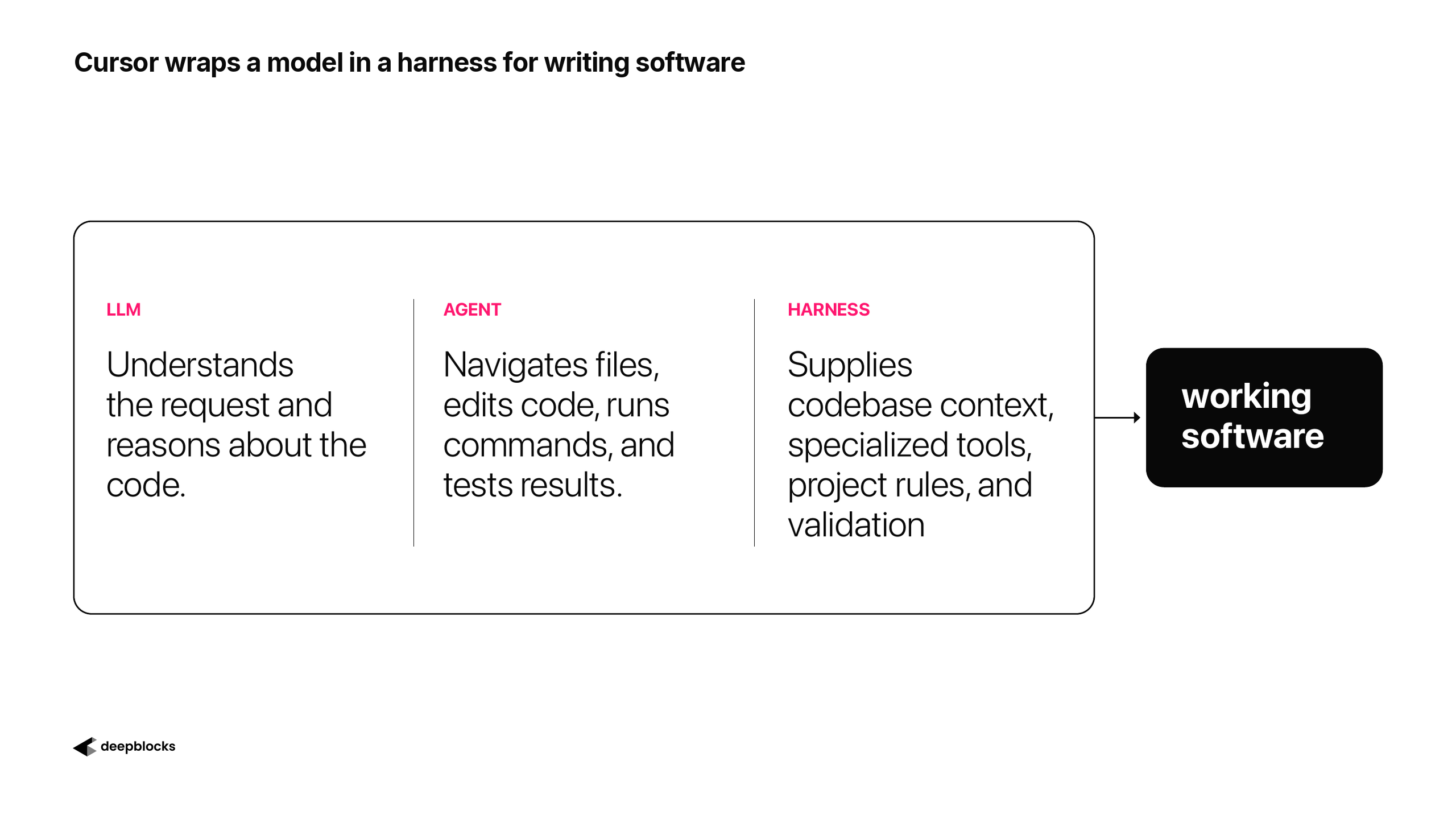
Cursor is the clearest working example of a harness I know. All four parts are visible, and the fourth one, the check, took the software industry decades to build. That is the part that led to real estate.
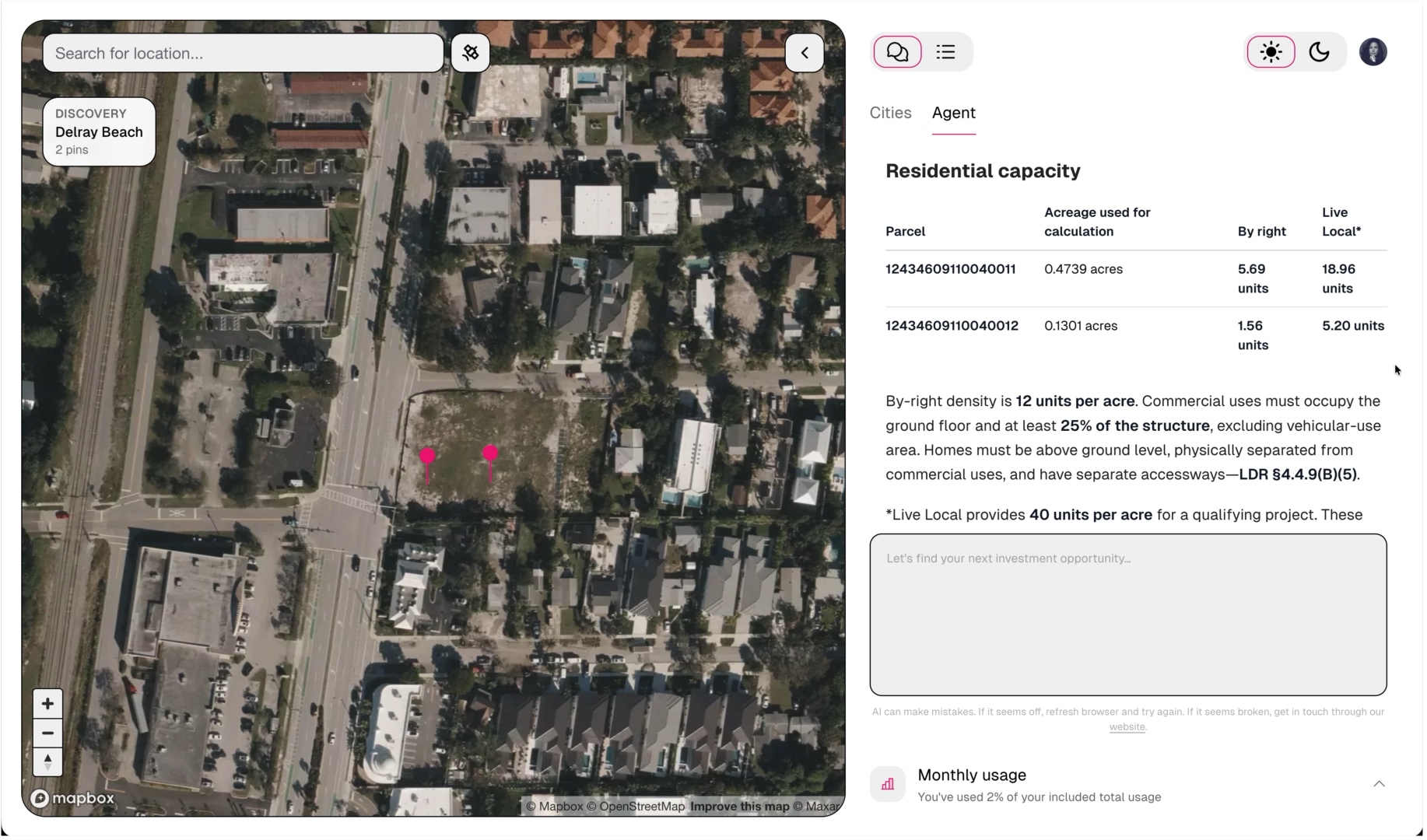
After comparing an AI search engine, a general AI model and parcel-finder, I asked the same property question inside AIM. The conversation separated the two lots and explained the development options and conditions for each.
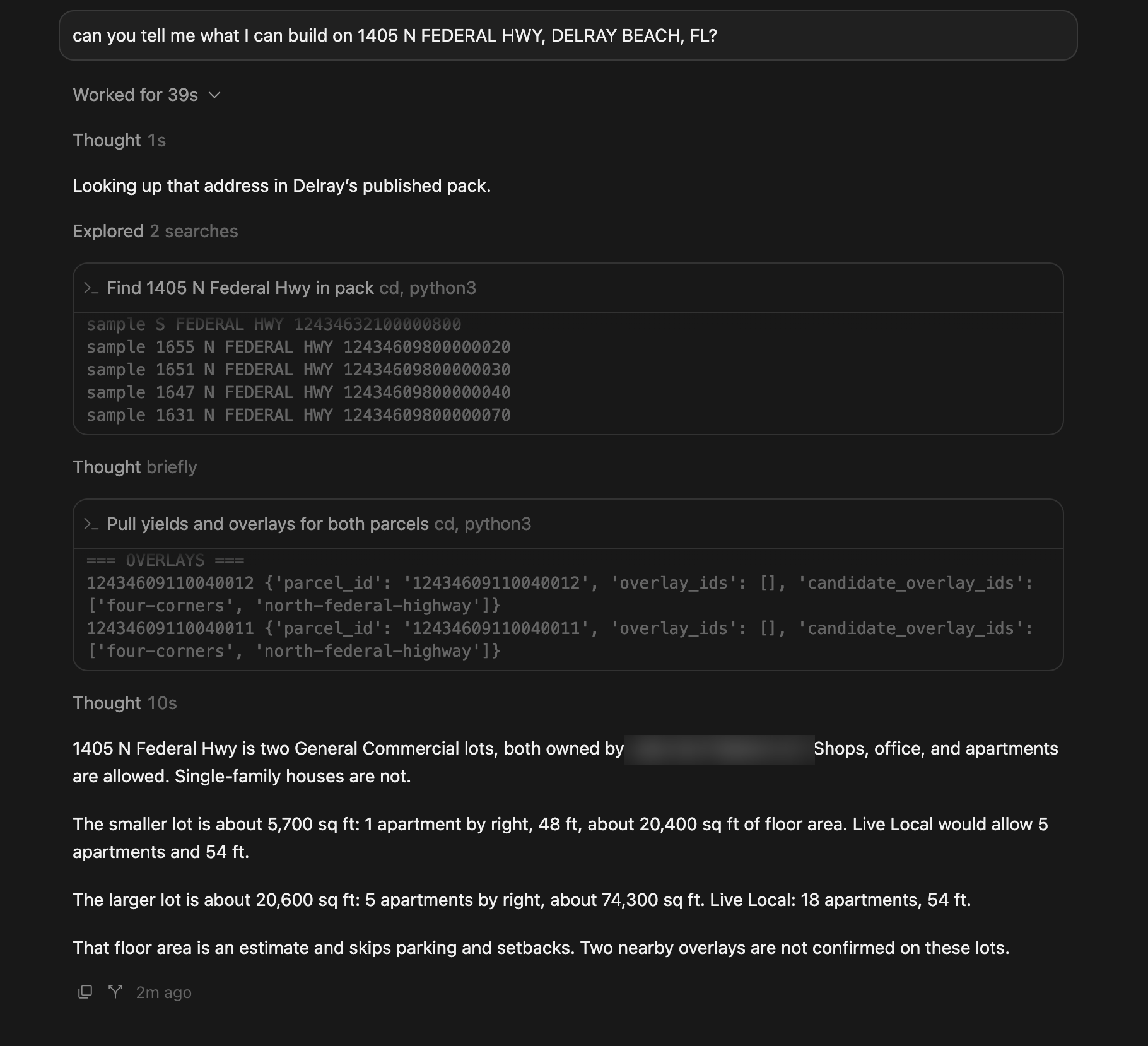
I wanted to see whether parcel-finder gave me a better answer than an AI search engine or a general AI model. I asked all three what I could build at the same Delray Beach address. Parcel-finder gave me unit counts for the individual lots, with the conditions and limits attached.
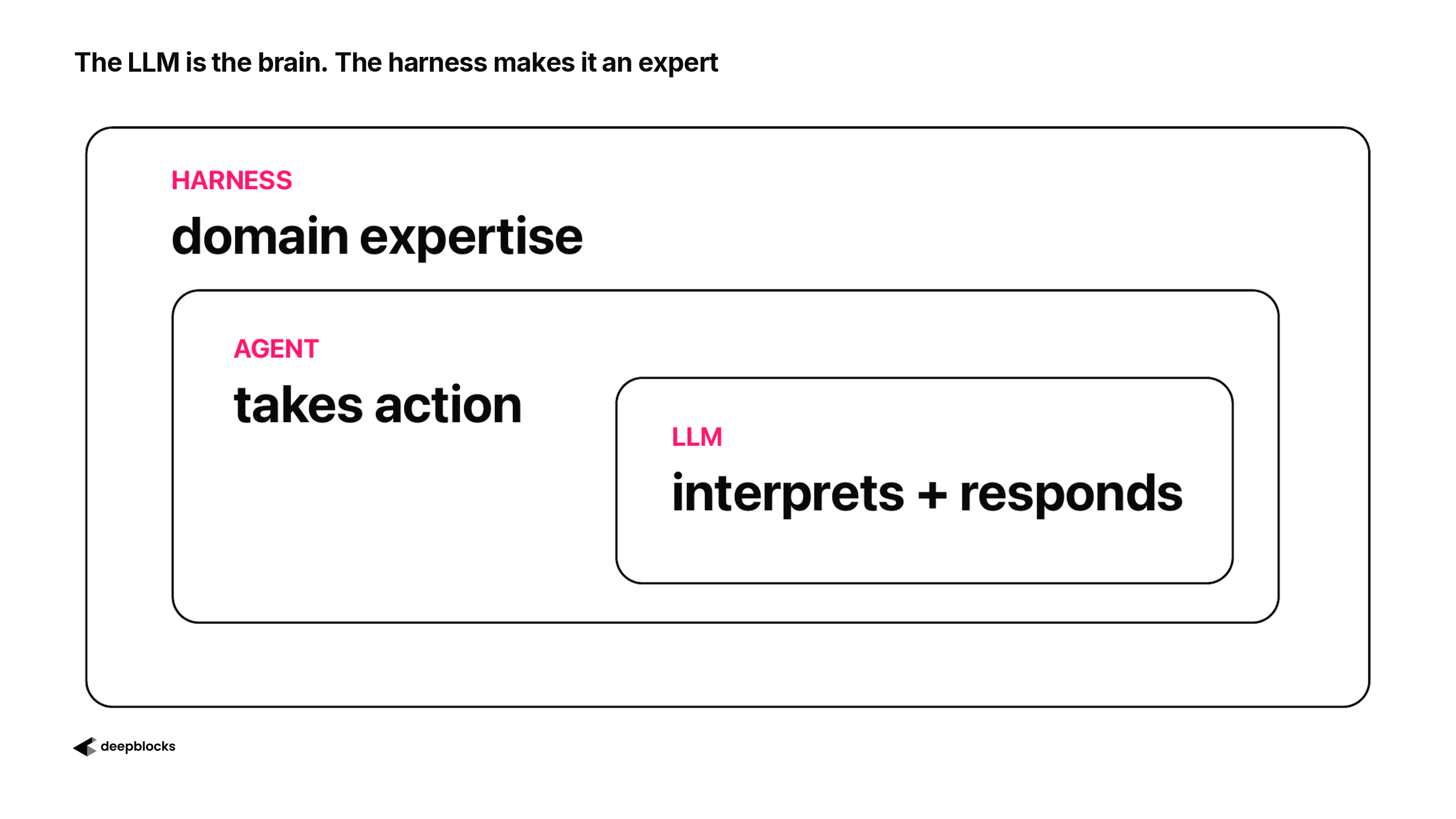
Most conversations about AI stop at the model. The model is the brain. The agent gives it arms and legs. The harness makes it an expert, and the harness is the part you should be asking about.
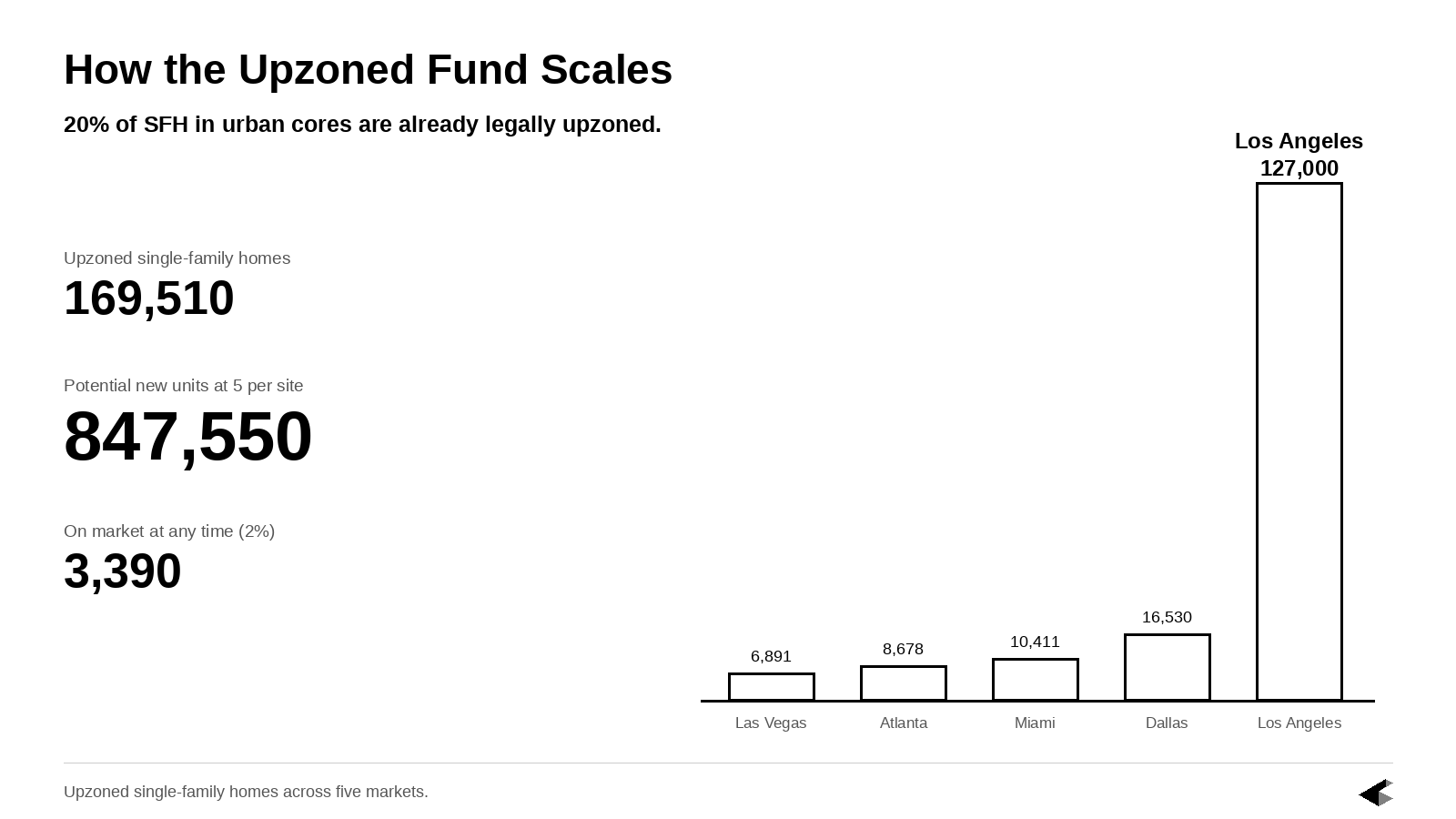
About 20% of single-family homes in urban cores are already upzoned. Across five markets that is 169,510 homes, 847,550 units of permitted capacity, and roughly 3,390 on the market at any time.
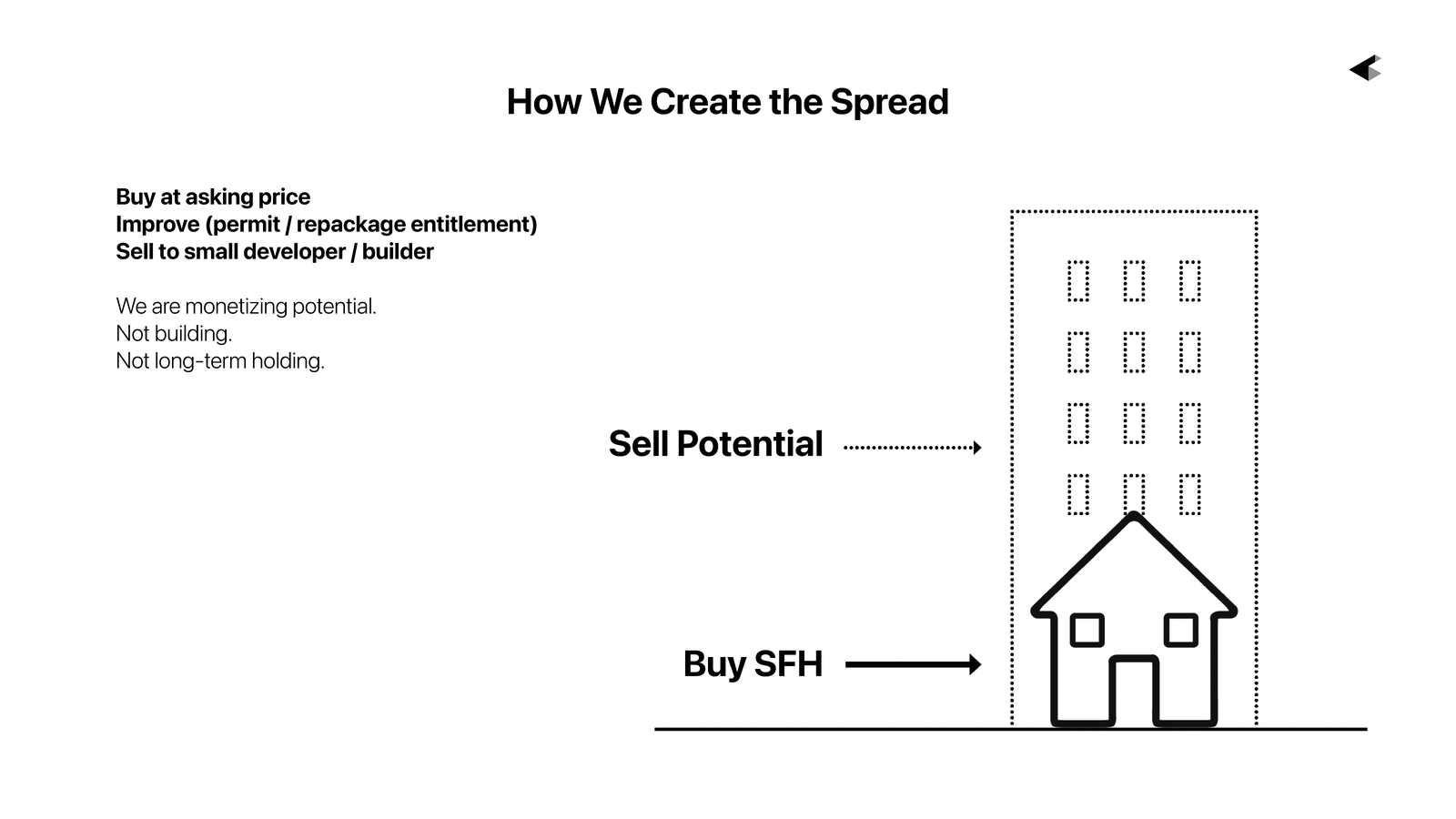
Zoning capacity is an economic asset, but it is often priced slowly and unevenly. How residual land value reveals parcels still trading like houses on land worth considerably more.
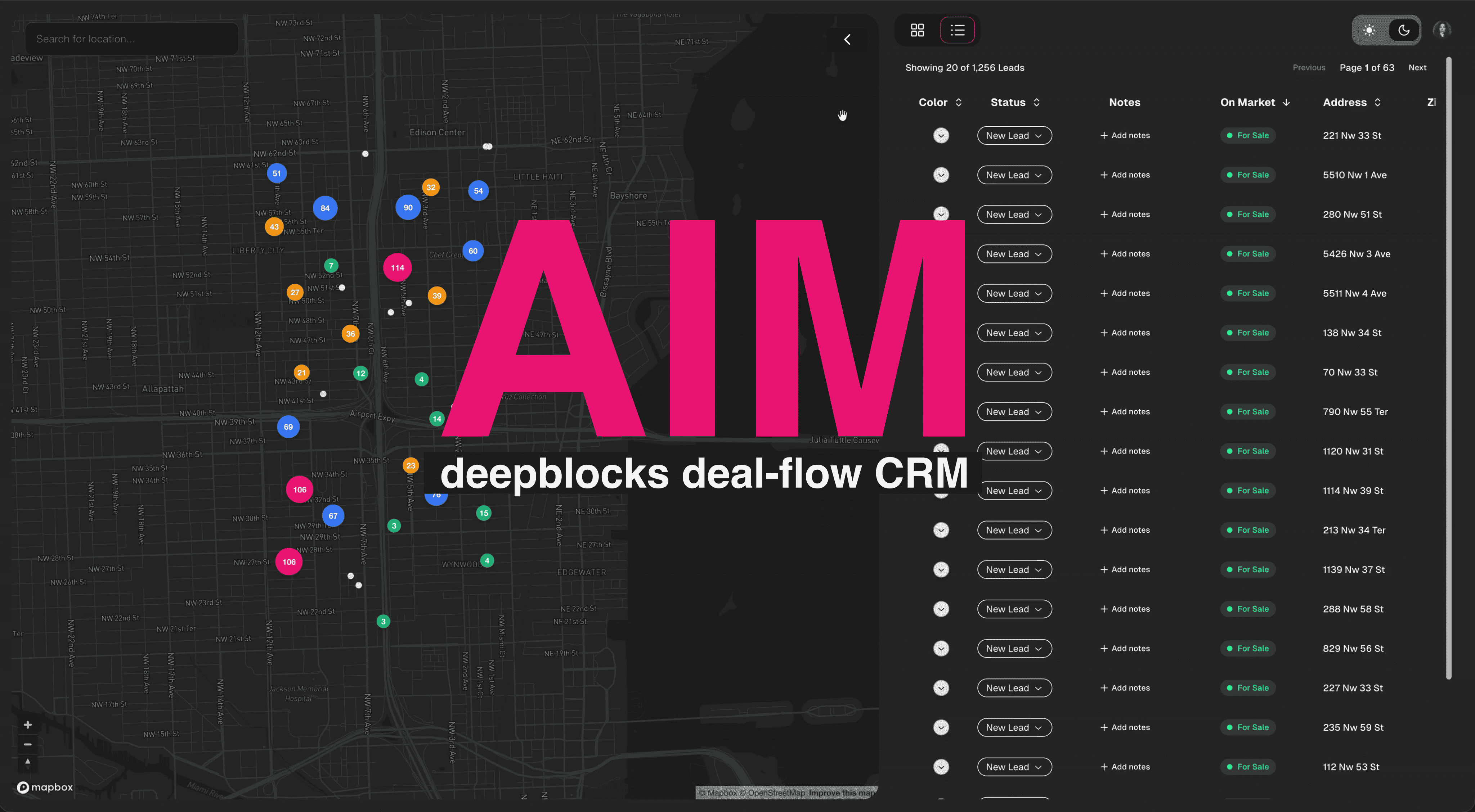
Finding opportunities is only the beginning. As deal pipelines grow, investment teams need one place to organize, compare, track, and move every opportunity forward.
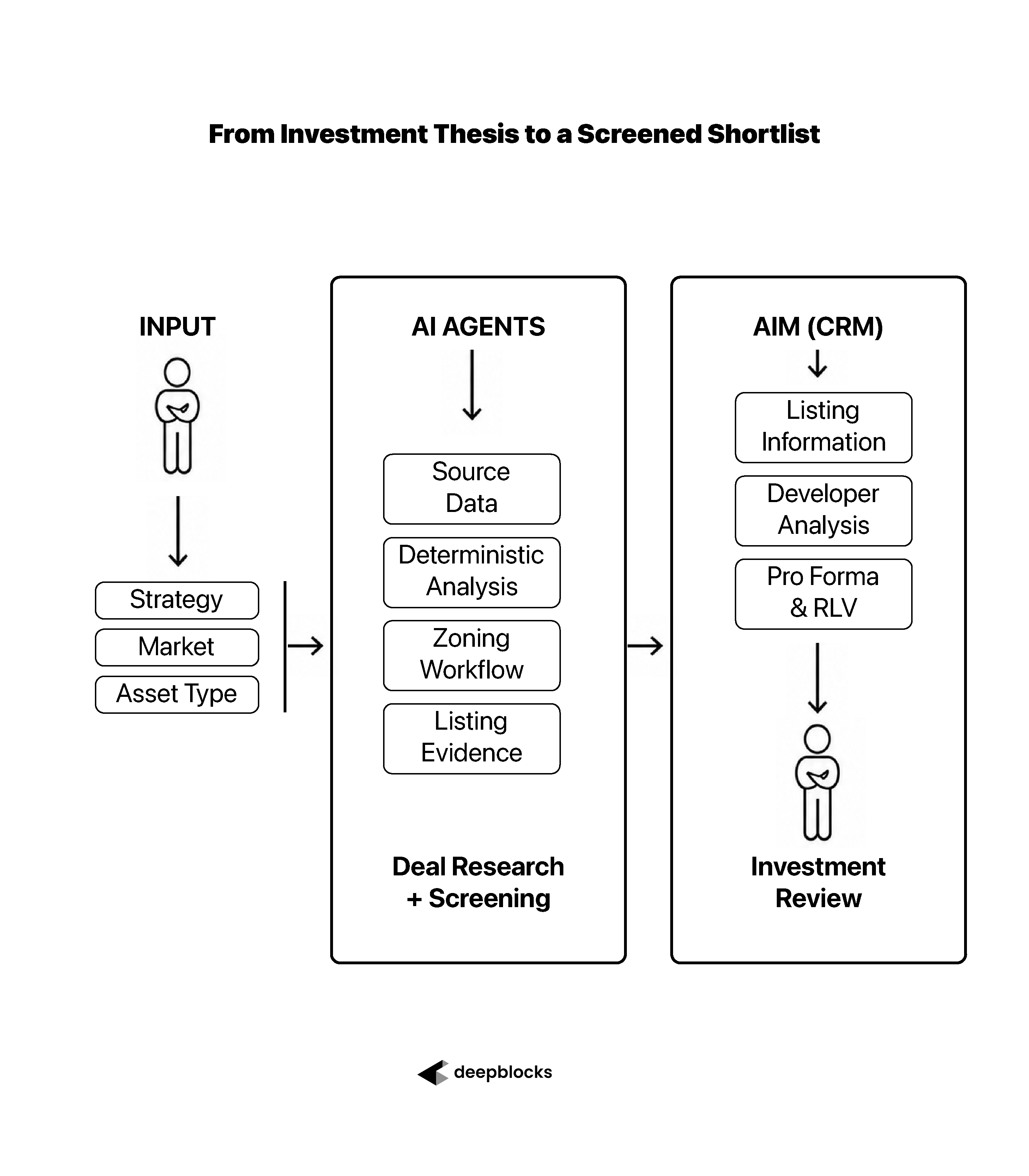
Turning a plain-English investment thesis into a property shortlist requires agents, deterministic algorithms, structured zoning data, and human judgment working together.
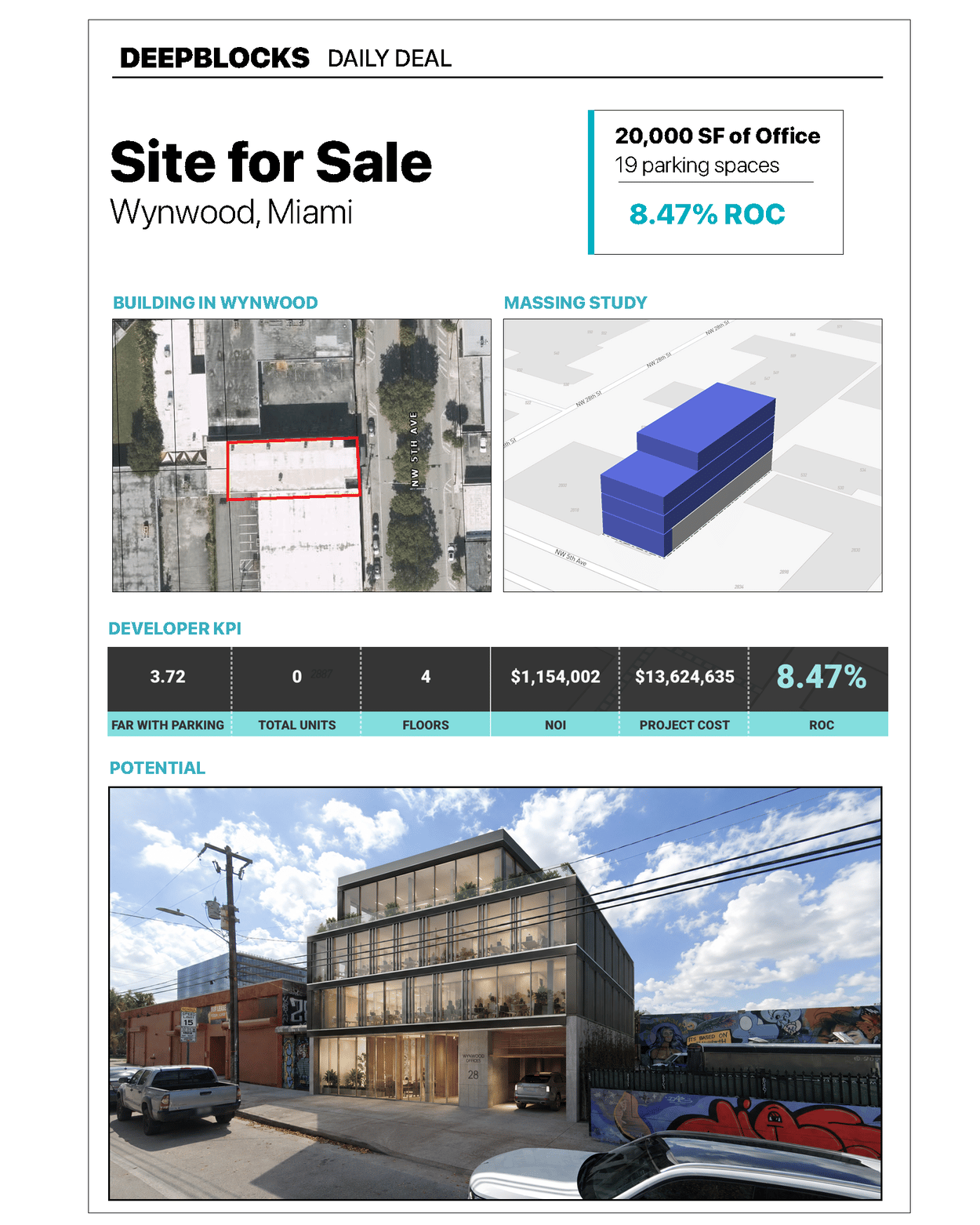
A 13,000 SF warehouse site in Wynwood tests whether NRD-1 parking reductions can unlock a 20,000 SF boutique office project.
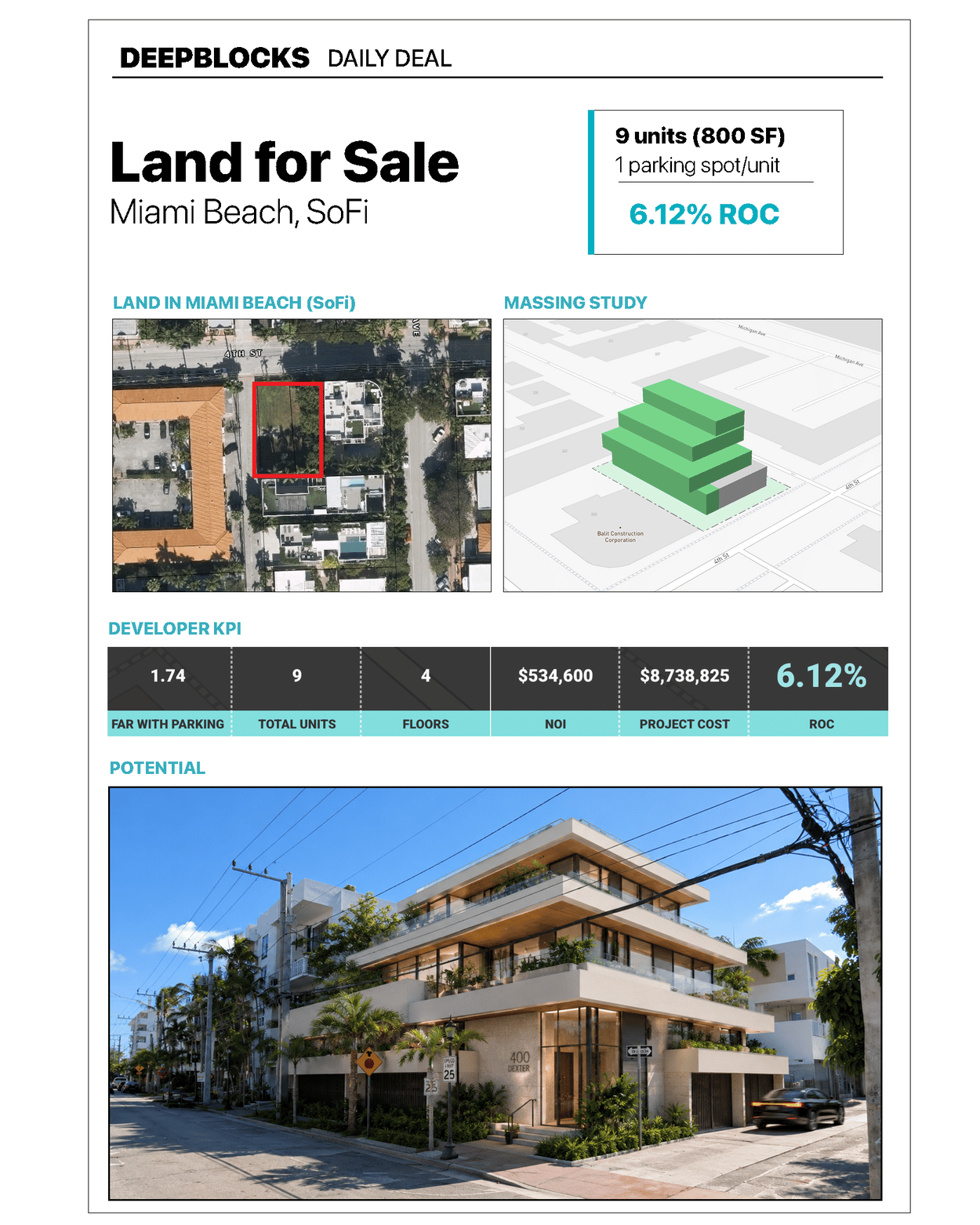
An assembled 6,990 SF site in South of Fifth may support a 9-unit multifamily project, even without short-term rentals. The model shows a workable rental scenario, a potentially stronger condominium strategy, and an interesting affordable-density question.
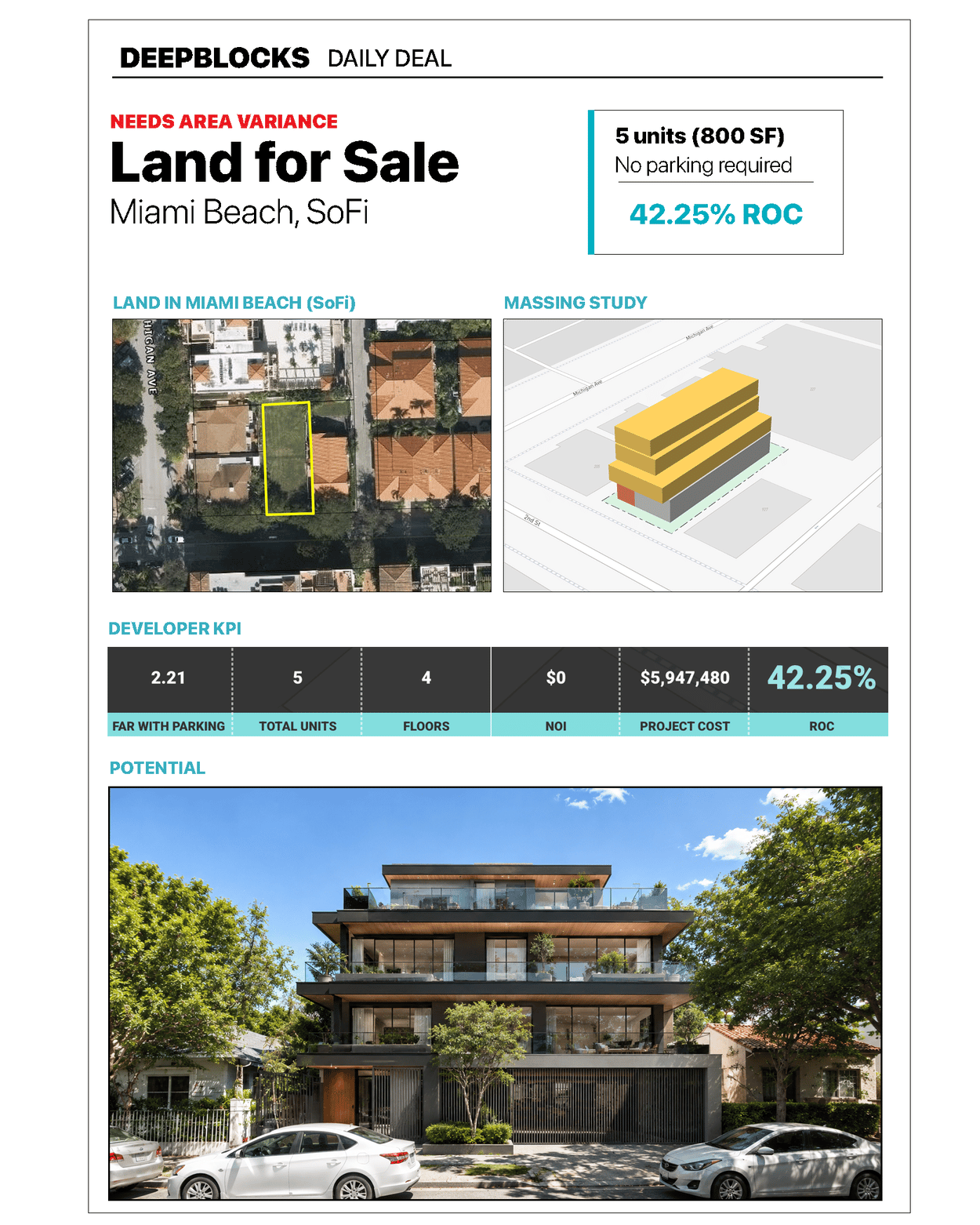
A small land listing in South of Fifth may have a path to a 5-unit boutique condominium project. The opportunity is compelling because parking may not be required, but the 4,000 SF lot size creates a zoning caveat that could require a variance.